


 T. Nashipae
The fighting bulls of Western Kenya




Reading Time: 4min | Sat. 31.12.22. | 15:58
In Kakamega bull-fighting is a close-up and personal experience, with the crowd watching intently and running occasionally to avoid getting hit.
Bulls are widely revered in Luhya community because they are more important their culture. When an elder passes away, the Isukha and Idakho people, known for their bull fights, give them a dignified send-off. Bulls are utilized to add soil to a man's grave as a sign of respect. It is believed that by following this tradition, the deceased's spirit would rest in peace and that if it is not, the deceased soul will torment the family.
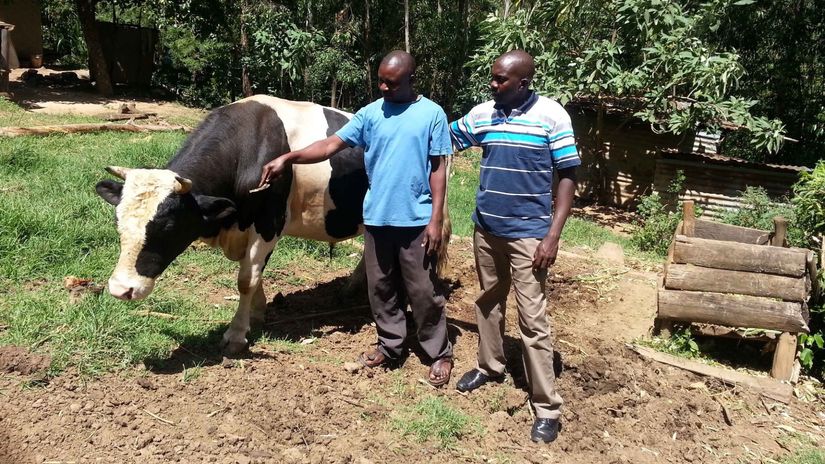
In Western Kenya, bull fighting is a famous cultural tradition. Residents of Shinyalu and Ikolomani constituencies in Kakamega County, especially, are the main practitioners. Thousands of spectators assemble at Malinya Stadium in the Ikolomani constituency to watch the battle. The event takes place on various Saturdays and on federal holidays.
The Luhya tribe's communities have relied on bullfighting as a mainstay of their efforts to maintain peace. In contrast to the corrida de toros in Spain, when a man battles a bull, the bullfighting in Kakamega pits bulls against one another.
Each bull represents a particular village within the county as well as the village it comes from.
Prior to a bull fight, the bulls are prepared for a good performance. The bulls are fed well to prepare them for the fight. They are also given a regional beverage called Busaa and are typically red-eyed while high on a mixture of cannabis, moonshine, and who knows what else, making them aggressive throughout the fight. Additionally, they are kept apart from the others so that they can go berserk.
Training boys into men amongst the Baluhyia is a lifelong process that starts with circumcision. During bullfighting, they take to test their macho.
— Dr Boni Khalwale, CBS (@KBonimtetezi) December 25, 2022
Here at Malinya Stadium, my son, Steve Kapten Khalwale (in blue Man Utd T-shirt) & his agemates (Bakochi) going through the rituals pic.twitter.com/IQrBMrw0Na
The event often gets underway in the wee hours of the morning. Around 5AM in the morning, people are awake, and they start the parade to the fighting arena from all the villages, leading the enormous bulls to the designated stadium.
The procession features Isukuti musicians, who play a traditional form of music from Western Kenya and accompany the bull as it makes its way to the fight, attracting more people along the way. As the crowd swells, agile children climb up in thin, branchless tree trunks to get a better view and to dodge the bulls on the ground. Grown men tumble through cornstalks and jumped fences.
Depending on the size of each animal, the organizers decide who will fight whom once they get to the stadium.
Unlike other formal sports where fans have separate locations to view from, here, the applauding crowds share the pitch with the battling bulls. The rule of this match is; no matter where the fight goes, people go and compensation will be arranged later.
Watching this sport is arguably the most dangerous activity, especially at unofficial events. Face to face, the red-eyed bulls assess each other before slamming into one another.
Butsotso Bullfighting Festival happening now at Ebhuchinga Primary, Shibhuli Market Kakamega County.
— Daddy Owen (@daddyowenmusic) December 26, 2022
Our heritage our pride. pic.twitter.com/IXfgfLMSmD
The competition takes place in an environment more akin to a fight club, with participants and spectators surrounding the combatants and supporting their favorite animal.
A bull will only be deemed the victor when he defeats his opponent by chasing him away.
Once more, the Isukuti Dance will be performed to represent the triumph of the locals from the area where the champion bull is bred. The triumphant bull will be surrounded by the entire town as they parade him home while singing and celebrating. After the fight, the bull that loses is immediately butchered as it recovers from its wounds.
Today, both locals and visitors from abroad are drawn to the sport. Supporters of the sport assert that it is a significant economic activity and a component of the Luhya cultural legacy, despite criticism from certain animal rights advocates.
SOURCE OF INCOME
Bulls in League A are often priced between Sh15, 000 and Sh20, 000 during regular bullfights, whereas bulls in League B are typically charged between Sh8,000 and Sh10, 000.
The fees for League C range from 4,000 to 6,000.
It could cost up to Sh 350,000 for a politician to hire bulls to create a fight and gain attention for his campaigns, including mobilization and other logistical costs.
SUPPORT FROM THE COUNTY GOVERNMENT
The county administration of Kakamega recently erected a stadium specifically to stage bull fights in an effort to exploit the tradition to promote tourism as a result of this growing popularity.
A policy to control bullfighting is also being developed by the county administration. The action coincides with an increase in bullfighting-related injuries and fatalities.
Bullfighting. Malava Constituency.
— Bwire D.N🇰🇪🇩🇰 (@dixon_bn) December 26, 2022
Hapa "Bosco" ilikuwa imecharge waiting for the opponents unfortunately the opponent took off and disappeared in the School forest. pic.twitter.com/15gHcn8qo3
They also want the provision of security during bouts and safety measures like ambulances; similar to what is done during football games, as well as insurance coverage for both spectators and animals.
Mount, a bull from the Ikolomani Constituency is the reigning bull fighting Champion of Kakamega after defeating Magufuli during this year's bull fighting event.